We’re not preparing for the future. We’re already living in it.
AI won’t just change how we work—it will challenge what it even means to be human.
Everyone’s talking about Artificial Intelligence. Startups are racing to integrate it, investors are throwing billions at it, and headlines flip between utopian promises and doomsday scenarios. But beneath all the hype, one thing is becoming clear: this isn’t just another tool. It’s a turning point.
In this excerpt from my upcoming book Leverages of Wealth and Progress, we’ll look beyond the surface and into the deeper questions AI is forcing us to ask — not just about technology, but about ourselves.
AI at Work: Law, Medicine, and the Creative Spark
Artificial Intelligence is already reshaping industries once thought to be untouchably human. In law, AI can now scan contracts, detect inconsistencies, and even predict case outcomes faster and more accurately than any paralegal. If you know how to write good prompts, you might not even need a lawyer — you could defend yourself, for free.
In medicine, AI reads X-rays, MRIs, and bloodwork with a level of detail that can rival top specialists. I’m satisfied with my doctor today, but if I had one of those who rush patients like they’re spreadsheet entries—soulless, transactional, and acting more like sales reps for Big Pharma — I’d switch to an AI without hesitation. People need people, yes — but AI will force many of us to evolve. Some will rise. Some won’t.
Even in art, writing, and music, AI has gone from novelty to revolution. The pace is staggering. Just a year ago, this tech was a toy. Today, it’s a collaborator. Machines still lack soul, but they’ve become damn good at helping us refine, generate, and accelerate creative output. And very soon, we won’t be able to tell whether a painting or a novel was made by a human — or by an algorithm with exceptional taste.
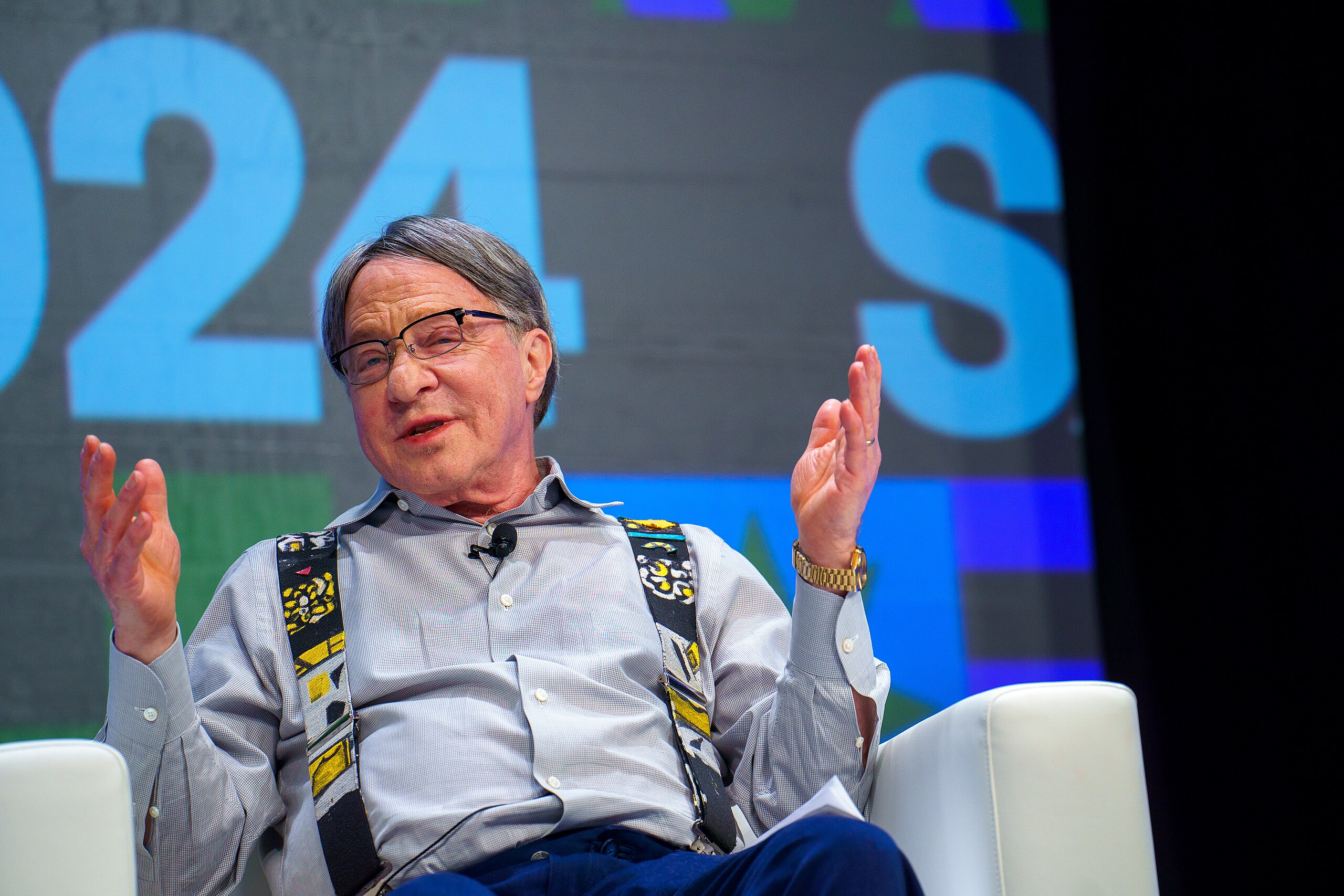
“2029 is the consistent date I have predicted for when an AI will pass a valid Turing test and therefore achieve human levels of intelligence. I have set the date 2045 for the ‘Singularity’ which is when we will multiply our effective intelligence a billion-fold by merging with the intelligence we have created.”
— Ray Kurzweil, futurist
Exponential Speed: We’ve Never Seen This Before
To understand the scope of what’s coming, consider this: it took decades for electricity, phones, or the internet to reach their first 100 million users. ChatGPT? Just two months.
Ray Kurzweil predicts AI will pass the Turing test by 2029 and reach “Singularity” by 2045. Masayoshi Son says that in 30 years, chips in our shoes will outthink the human brain.
Meanwhile, computing power is doubling every 12 months. AI capability is doubling every six. We are no longer in linear time — we’re climbing a vertical curve.
But the True Shift Isn’t Technical — It’s Social
Here’s the part nobody talks about enough: AI isn’t just changing the tools. It’s changing the roles of human beings. Owners of capital have always needed two things:
- Labor to multiply their wealth
- Consumers to buy their products
So, what happens when humans are no longer needed for either?
If robots do the work and AI creates the products, who earns income? And if no one earns, who buys? Algorithms don’t go shopping. They don’t eat, sleep, or vacation. They don’t desire.
The entire structure of modern capitalism hinges on participation. Take that away, and the engine stalls.
And what about education? Our schools still train kids for jobs in an economy that might not exist in ten years. If work disappears, what do we educate for? What does meaning look like when productivity is no longer a requirement?
A New Role for the State — or None at All?
The state, by its classical definition, is the apparatus that protects the interests of the ruling class — and it holds the exclusive right to use legal force. But what happens when there’s no traditional ruling class left, and the state begins serving global economic entities with no borders, no electorate, and no accountability?
As wealth, data, and power concentrate in a handful of tech ecosystems, we risk a future where democratic structures are simply too slow — or too irrelevant — to matter.
This isn’t just a governance issue. It’s a survival issue.
So What Do We Do?
The worst thing we could do is panic.
The second worst thing? Sit and wait.
If you’re not already using AI in your work, your business, or your learning — you’re falling behind. Not because AI will replace you, but because someone who knows how to use it will.
Start by learning how to write better prompts. Train AI agents for your repetitive tasks. Build local AI models tailored to your company or industry. Think beyond “productivity” and start building scalable intelligence.
And most importantly: don’t delegate your thinking.
History shows that the moment we outsource our critical faculties — first to religion, then to ideology, now to algorithms — we risk losing them altogether. That’s the warning of both Orwell and Huxley: not that power will take our freedom, but that we’ll give it away willingly, for comfort.
It’s Not the Tech That Matters. It’s What We Become
Technology has always been a mirror. It reflects who we are.
And like any mirror, it can distort. But it can also reveal.
If we teach AI to optimize for clicks, for profit, for control — it will do so relentlessly.
But if we teach it to seek truth, compassion, and long-term flourishing — it might just become our most powerful ally.
So let’s be intentional. Let’s build better inputs — both technical and human.
Because in the end, the most important innovation won’t be what AI becomes.
It will be what we become in response to it.
Stay curious.