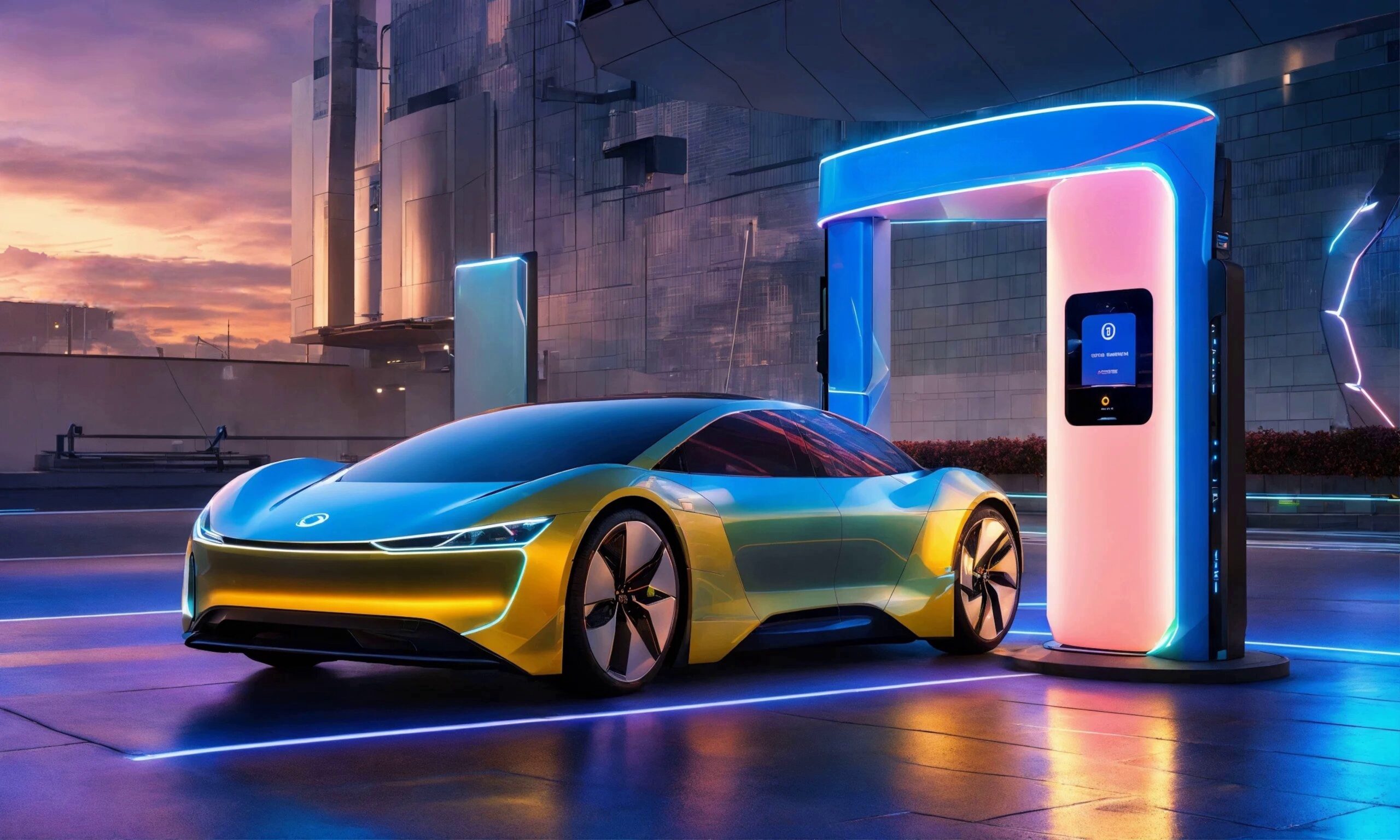
A Safer, Faster Battery Is Finally Here: Aluminum-Ion Batteries Could Redefine the Future of Energy
Developed and pioneered in part by Tesla’s advanced materials research teams, aluminum-ion batteries may soon replace lithium as the cornerstone of energy storage – not with incremental improvements, but with radical reinvention.
For over three decades, lithium-ion batteries have powered our phones, laptops, electric vehicles, and even homes. But behind their widespread adoption lurks a set of well-known problems: limited lifespan, risk of fire, slow charging times, resource scarcity, and questionable environmental and ethical costs.
A new battery chemistry, built around aluminum instead of lithium, is poised to shift the equation – offering longer life, faster charging, safer operation, and a more sustainable supply chain.
How It Works
The difference begins at the atomic level. Aluminum ions carry three positive charges (Li+ vs. Al³⁺), which allows them to transfer more energy per ion compared to lithium. This means fewer ions are needed to store the same amount of energy, enabling higher density and faster charge/discharge cycles.
Furthermore, aluminum avoids many of the structural instabilities of lithium. It doesn’t form dendrites – the sharp metallic growths that cause short circuits, and operates reliably across a much broader temperature range. Combined with advanced electrode architectures and self-healing materials, this makes for a battery that not only performs better but lasts dramatically longer
Key Advantages of Aluminum-Ion Batteries

1. Energy Density
While conventional lithium-ion batteries top out around 250 Wh/kg, advanced aluminum-ion designs are demonstrating volumetric energy densities beyond 1,400 Wh/L. This translates to lighter batteries, more range, and new design possibilities in vehicles, devices, and infrastructure.
2. Ultra-Long Lifespan & Self-Healing Electrodes
Lithium batteries typically degrade after 2,000–3,000 cycles. Aluminum-ion prototypes have surpassed 15,000 cycles, thanks to self-repairing electrode systems that restore microscopic damage and preserve structural integrity, even improving conductivity over time.
3. Extreme Charging Speeds
Charging times drop from 30–60 minutes (lithium) to under 10 minutes for a full recharge — without overheating or stress to the battery.
4. Fire Safety and Thermal Stability
No dendrite formation means no short circuits. Aluminum-ion batteries are chemically stable between -45°C and +65°C, removing the need for complex cooling systems and making thermal runaway nearly impossible.
5. Deep Sleep Mode & Low Capacity Loss
Unlike lithium, which degrades over time even in storage, aluminum-ion batteries can sit unused for years with virtually zero capacity loss. After a decade of deep storage, they can be reactivated in 30 seconds at near full performance.
6. Sustainability & Supply Chain Simplicity
Lithium extraction often involves water-intensive mining and international supply chains concentrated in geopolitically sensitive regions. Aluminum, by contrast, is locally available in many countries, easier to process, and recyclable with minimal efficiency loss. Some advanced aluminum-ion batteries retain up to 95% of their performance even after multiple recycling cycles.
Most importantly, aluminum-ion technology may finally offer an escape route from the destructive logic of extractive capitalism. In countries like Serbia, Argentina, Chile, Bolivia, the Democratic Republic of Congo, and Indonesia, local populations have fought for years, often in vain, against mining giants like Rio Tinto, whose lithium projects threaten to permanently destroy ecosystems, displace communities, and poison water supplies in pursuit of marginal corporate profits.
What decades of protests and petitions could not stop, science just might. With aluminum-ion, we may no longer need to choose between progress and preservation – because clean, abundant energy doesn’t have to come at the cost of people and nature.
A Battery that Rewrites the Rules
Aluminum-ion batteries won’t just change the devices we use. They promise to reshape how energy is produced, stored, and distributed. With potential applications in vehicles, homes, off-grid systems, aerospace, and industrial micro-grids, this technology is not just an improvement, it’s a redefinition.
The lithium era served its purpose, bringing portable power to the world. But the next chapter in energy storage might just be written in aluminum.
The energy transition isn’t just about what powers our machines – it’s about what powers our future.
Stay curious.