Behind the numbers of a progressive labor policy, and what it reveals about the future of work, power, and productivity.
Slovenia’s 80-90-100 policy sounds like a win for aging workers and a step toward modern labor reform. But when you break down who gets what, and who pays, it reveals a deeper tension between governments, businesses, and the true lever of progress: people.
I was born in Serbia, but I’ve spent more than two-thirds of my life in Slovenia, a place that, for all its quirks, I’ve come to care about deeply. I still keep an eye on both countries, partly out of habit, mostly out of heart. And every so often, something happens here that makes me pause and think, “Wait a minute… did anyone run the math on this?”
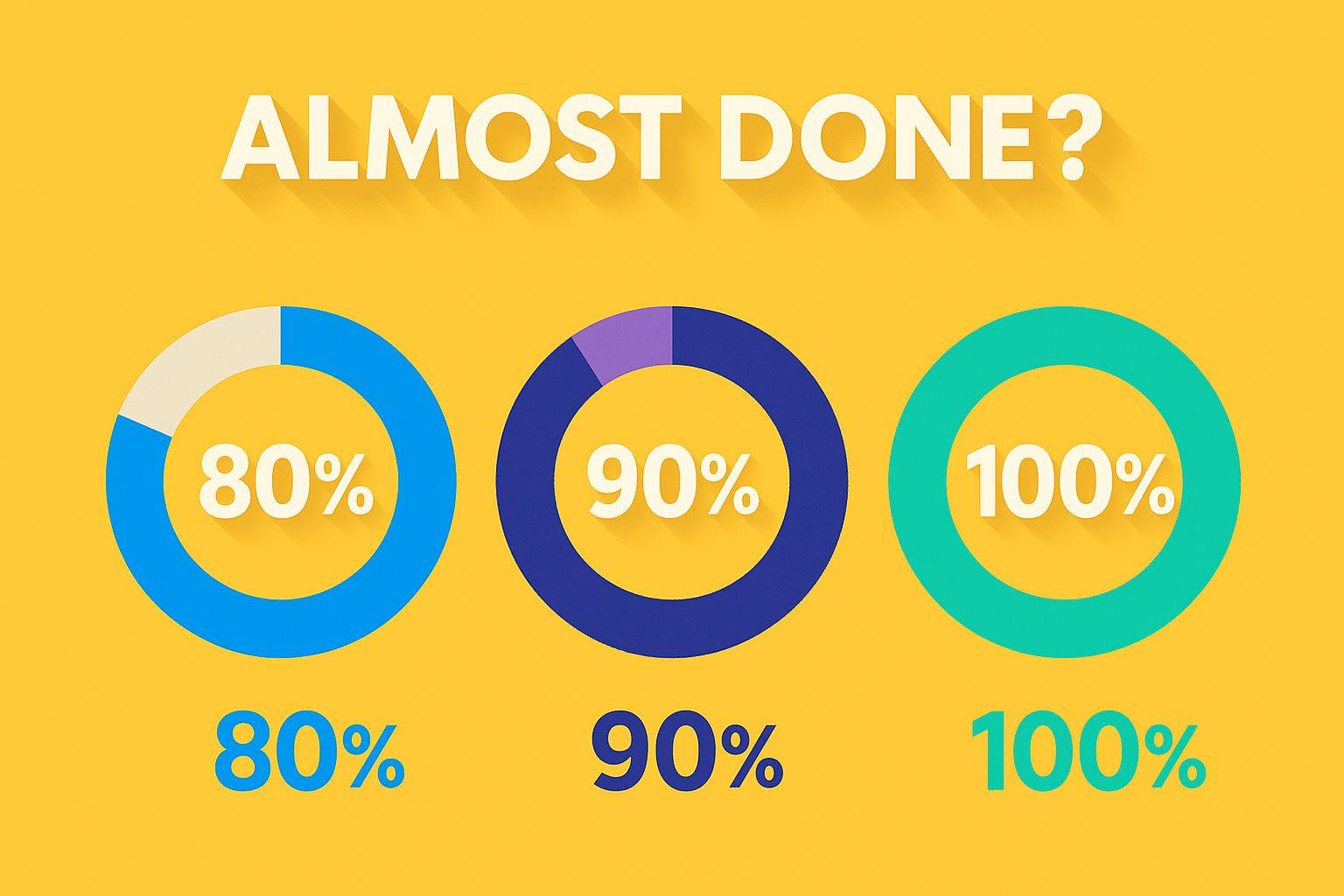
As of January 1, 2026, Slovenia is introducing a new policy informally called the 80-90-100 Law. The premise sounds generous enough: If you’re over 58, you’ll be allowed to work just 80% of your normal hours, get 90% of your pay, and, here’s the kicker, your employer still pays 100% of the taxes and social contributions. If this were a poker hand, the employee walks away with a grin and a solid deal: 10% less money for 20% less work. The state? Business as usual. It collects everything, regardless of how much anyone’s actually working. But the employer? The one who just lost a fifth of someone’s time and barely saw a reduction in cost? That’s the player who just got hustled.
Now, if this law had come from some obscure backbench politician with a soft spot for utopian experiments, I might’ve shrugged it off. But no – Slovenia is just the latest in a line of countries (including Germany, Iceland, Ireland, and Belgium) exploring similar structures. Apparently, this is becoming a trend.
To be clear: taking care of older workers is a noble aim. Supporting work-life balance is good. But it’s hard not to notice that the company, in this three-way deal, is the only one that’s both losing time and footing the full bill.
From a macroeconomic point of view, there’s another ripple effect. Less pay means lower purchasing power, which means weaker sales, which means smaller profits, especially for the businesses now subsidizing this whole thing. The law looks compassionate on paper, but like so many well-intentioned regulations, it assumes someone else will absorb the cost. And that someone, once again, is the entrepreneur.
And here’s where it connects with a much larger idea, one I explore in my forthcoming book Leverages of Wealth and Progress. Among all the levers available to build wealth, Working Force remains one of the most misunderstood, and most frequently misused. Especially by states.
Below is the final part of the chapter dedicated to this lever. It touches on both the human side of labor and the inevitable transformation we’re seeing due to automation, digital tools, and AI. I’ve left the full flavor of the book intact – because this topic deserves it.
Excerpt from “Leverages of Wealth and Progress”

It doesn’t take much brilliance to amass wealth by exploiting slave labor or underpaid workers from developing countries. Even today, many business owners pile up fortunes at the expense of poorly paid employees, but that’s the worst possible foundation for wealth. Miserable workers have never made anyone truly successful.
“If you treat an individual as he is, he will remain how he is. But if you treat him as if he were what he ought to be and could be, he will become what he ought to be and could be.”
— Johann Wolfgang von Goethe
The best way to leverage human labor for wealth creation is to surround yourself with people smarter than you (and here’s a tip: if you’re the smartest person in the room, find a new room). See them first as people, not just employees or workers. Share a common vision, mission, and values with them. Grow and learn together as you pursue shared goals. On that path, be ruthless with those who exploit the system, your goodwill, or other people for their own selfish gain – one bad apple really can spoil the whole crate, so don’t hesitate to show them the door.
If you’re still not using machines and computers to create wealth, despite the industrial revolution and the rise of the Internet, it’s time to ask yourself, what’s your excuse? You’ve had 200 years since the first and 50 since the second to figure out how to leverage these tools for your own benefit. The problem is serious, because I can almost guarantee that you’re already using cars, phones, and computers – those tools were designed to build someone else’s wealth. So, why not decide today to use them for building your own?
Just Start! Do Your S**t! & Keep Going! Once you commit to changing your tomorrow by being the best version of yourself today, opportunities and results will start knocking on your door.
“The definition of insanity is doing the same thing over and over again and expecting different results.”
— Albert Einstein
These days, almost anyone can set up solar panels, or even harness wind or hydro power. After the initial investment, nature does the rest of the work for you. It’s one of the simplest ways to generate passive income. But for those with an eye on the future, there’s even more and much more potential. Imagine combining robots, coding, and artificial intelligence to not only build wealth but to multiply it. Coding and AI, in particular, require minimal upfront costs beyond time and knowledge. And then there’s digital content, a powerful wealth multiplier. Once created, digital products can be replicated and delivered at scale with almost no additional cost, making them one of the most efficient ways to generate long-term income.
These tools create passive income streams that can grow exponentially, especially when they introduce innovative solutions that solve real-world problems or simplify life for millions. The economy of any country, by definition, is simply the number of people times their productivity. Now, imagine being able to manufacture as many intelligent robots, powered by AI, as you want. Suddenly, that country’s economy transforms into a limitless economy.
But here’s the thing – you can’t win limitless technology with a limited mindset and outdated tools. AI is not just another technological shift; it’s a complete paradigm shift. Those who cling to old ways of thinking, traditional business models, and slow-moving strategies will be left behind, while those who embrace adaptability, automation, and innovation will thrive.
However, if a select few corporations or countries, driven by advanced AI development, gain a significant edge over the rest of the world, we face a different kind of threat. This limitless economy advantage could divide the world into a very wealthy elite and a majority left behind, exacerbating global inequality and creating a divide that might be hard, if not impossible, to bridge.
This is exactly what I meant when I said we’re entering a new era of exponential, nearly vertical growth – thanks to AI. I genuinely believe that half of today’s companies won’t survive the next decade. AI is, without a doubt, a massive lever of wealth – so, make sure you’re one of those pulling that lever.
This article draws heavily from the chapter on Working Force in my upcoming book Leverages of Wealth and Progress, where I outline five of the most powerful levers for building personal and collective wealth. In one of my next postss post, I’ll dive deeper into one of the most disruptive and promising forces reshaping this particular lever: Artificial Intelligence.
You won’t want to miss it.
Stay curious